Maine Maritime Academy
A COLLEGE OF ENGINEERING, BUSINESS, SCIENCE, AND TRANSPORTATION
Nuclear Engineering Technology
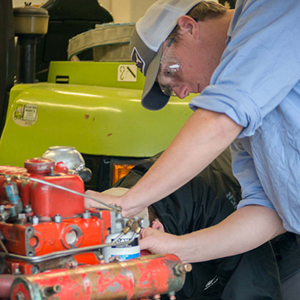
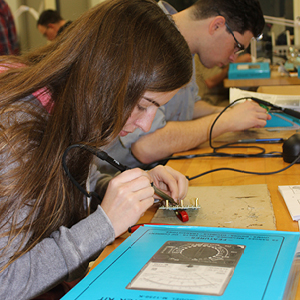
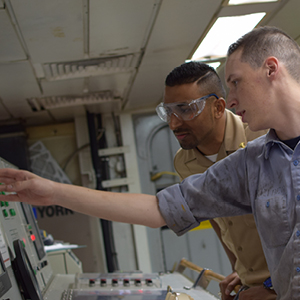
|Bachelor's DegreeMaine Maritime Academy’s Bachelor of Science in Nuclear Engineering Technology (NET) prepares students to enter one of the fastest-growing sectors of clean energy, maritime propulsion, and national security. Building on MMA’s nationally recognized strength in steam systems and hands-on engineering operations, the Nuclear Engineering Technology degree program combines applied technical coursework, dedicated nuclear laboratories, and required paid industrial co-ops in steam and nuclear facilities to ensure graduates are workforce-ready. Designed to respond directly to expanding global nuclear capacity and significant workforce shortages in power generation and naval shipbuilding, the program positions students for strong career outcomes in commercial nuclear plants, advanced small modular reactor development, and defense-related nuclear operations.

“The expected growth in the nuclear workforce globally signals new opportunities rather than shortages. With global nuclear employment projected to rise significantly by 2050, the International Atomic Energy Agency forecasts that the industry will require over four million professionals to support the anticipated expansion in nuclear capacity. Yet, within workforce planning meetings, a familiar refrain echoes: "We just can't find the people."- World Nuclear News
Job Opportunities
The renaissance of the nuclear industry is evident. Tech companies, e.g. Google, Amazon, and Microsoft, are restarting nuclear power plants, and investing heavily in the Generation IV small-modular reactors to produce power for Artificial Intelligence (AI)-driven data centers. This is fueling additional growth. In the high case scenario of the new International Atomic Energy Agency (IAEA) outlook, nuclear electrical generating capacity is projected to increase to 950 gigawatts by 2050. In this case, global capacity in 2050 would be slightly more than 2.5 times what it was in 2023. In the low case projection, capacity rises 40 per cent to 514 gigawatts. Starting, average salaries for engineers and technologists in this field are listed below.
- Department of Energy Nuclear Engineer – $144,746
- Nuclear Engineer (General) – $113,460
- Nuclear Technician – $82,080
- Nuclear Medicine Technologist – $77,950
- Nuclear Power Reactor Operator – $100,990
- Power Plant Operator – $85,950
- Nuclear Engineer (Portsmouth Naval Shipyard) - $92,921
- Nuclear Engineer (Norfolk Naval Shipyard) - $91,340
Why Nuclear Now
- International Energy Agency (IEA) — New Era for Nuclear: A new era for nuclear energy beckons
- Utility Dive — Nuclear Renaissance is Real: Why the nuclear energy renaissance is real — and necessary
- Goldman Sachs — The New Nuclear Age: The New Nuclear Age: Why the world is rethinking atomic power
- WABI TV Press Announcement: Watch
“Few academic degree programs have the potential of nuclear to change the world in a positive way by providing clean, reliable, carbon-free energy."- Paul Wlodkowski, Ph.D.
Explore Classes for the Nuclear Engineering Technology Degree
The Nuclear Engineering Technology degree at Maine Maritime Academy includes most of the required courses of the marine engineering operations degree with additional mathematics and technical sciences courses, such as statistics, strength of materials, and thermodynamics. Few engineering technology programs offer such a diverse range of topics along with the ability to apply concepts aboard training ships and commercial vessels. Through courses in the arts and sciences you’ll gain other skills that employers value. To ensure courses align with employer needs, engineering faculty regularly consult with an industrial advisory committee.
- Tech & Society
- Composition
- Pre-Calculus Mathematics
- Fundamentals of Engineering Operations
- Structured Problem Solving with Computers
- First Year Experience
- Humanities I
- Technical Calculus I
- Technical Physics I
- Chemical Principles
- Physical Education - swim based
- Physical Education
- Technical Physics II
- Steam Power Systems I
- Statistics and Dynamics
- Fluid Power
- Graphics
- Statistics For Business & Management
- Strength of Materials
- Thermodynamics I
- Electrical Power I
- Introduction to Nuclear Enginerring
- Independent Co-op I
- Humanities II
- Technical Calculus II
- Steam Turbines I
- Electrical Power II
- Thermodynamics II
- Engineering Economics
- Steam Generators I
- Nuclear Materials & Applications
- Power Control Electronics
- Risk Assessment and Reliability Eng.
- Independent Co-op II
- Technical Communications
- Environmental Regulation & Compliance
- Automation and Control
- Health Physics and Radiation Measurement Laboratory
- NET Capstone I
- Sustainable Energy & Society
- Social Science Elective
- Steam Power Systems II
- Nature and Properties of Materials
- NET Capstone II
Department Faculty


Get Started on Your Bachelor’s Degree in Nuclear Engineering Technology
Take the next step toward earning your marine engineering technology degree at Maine Maritime Academy.
Contact an Admissions Representative
If you’re ready to earn a marine engineering technology degree, please contact an admissions representative at Maine Maritime Academy.
Rated Military Friendly®
Maine Maritime Academy welcomes veterans and has the resources in place to help you transition to student life. Please contact our dedicated admissions representative for veterans.
Transfer
Maine Maritime Academy welcomes motivated and academically qualified transfer students. Please contact our admissions office to learn more about transferring to Maine Maritime Academy.
Apply now and request more information
We invite you to start your application or request more information about the marine engineering technology degree at Maine Maritime Academy.
Request More Information






All Rights Reserved © 2026 • Web issue?
Non-Discrimination Notice • Privacy Policy & GDPR