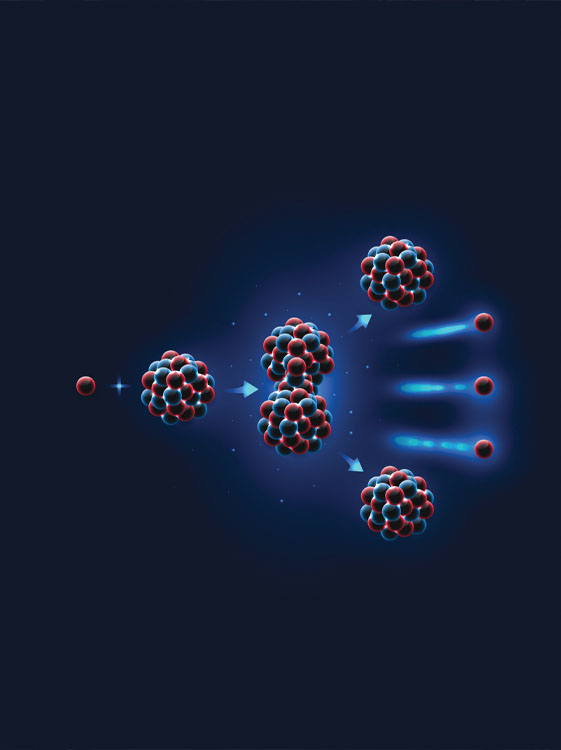
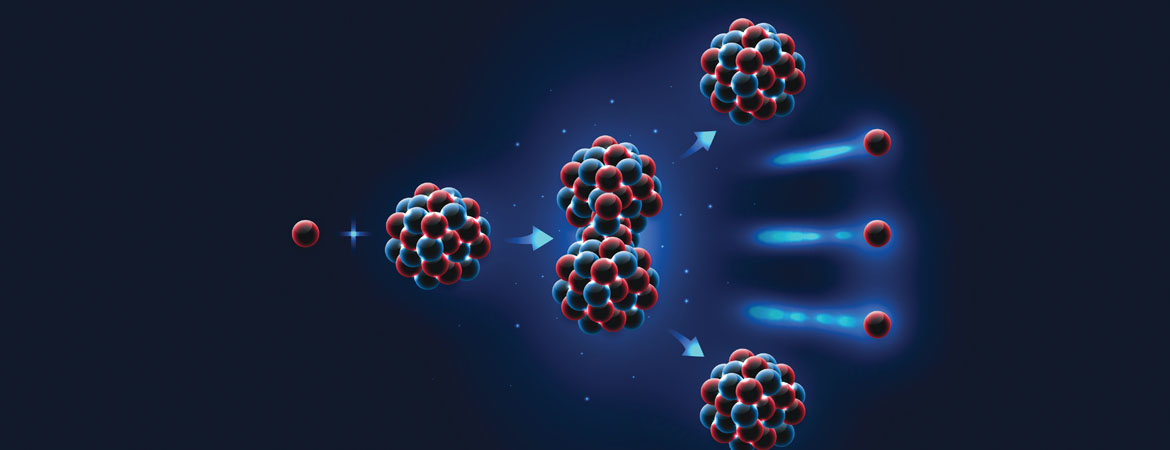
On May 1, 2026, the MMA Board of Trustees made a historic decision. They voted unanimously to approve a new academic program – Nuclear Engineering Technology (NET). In doing so, the Board established the Academy as the first maritime university in the United States with a major in this critical discipline. Complementing the minor that was introduced two years ago, this action also reaffirmed MMA’s longstanding leadership in the workforce development for the nuclear industry. In 1959, the Academy answered the nation’s call to provide licensed crew on the world’s first nuclear powered merchant ship, the N.S. Savannah. Today, our graduates will be prepared to advance the technology of the Generation IV small modular reactors (SMRs) for shoreside nuclear power plants, as well as their near-term application in commercial shipping.
Why Nuclear?
Rising demand for electricity, particularly in the Global South, along with the rapid growth of Artificial Intelligence (AI) are the primary economic drivers for nuclear energy. So is the increasing geopolitical vulnerability associated with price fluctuations and supply of fossil fuels, as evidenced by the recent blockage in the Strait of Hormuz.
Environmental considerations also feature prominently. In December 2023, at the Climate Change Conference in Dubai (COP28), the United Nations pledged to work toward tripling global nuclear power capacity to reach net-zero carbon emissions by 2050.
In the high case scenario of the new International Atomic Energy Agency (IAEA) outlook, nuclear electrical generating capacity is projected to increase to 950 gigawatts by 2050. Here, global capacity in 2050 would be slightly more than 2.5 times what it was in 2023. In the low case projection, capacity rises 40 per cent to 514 gigawatts.
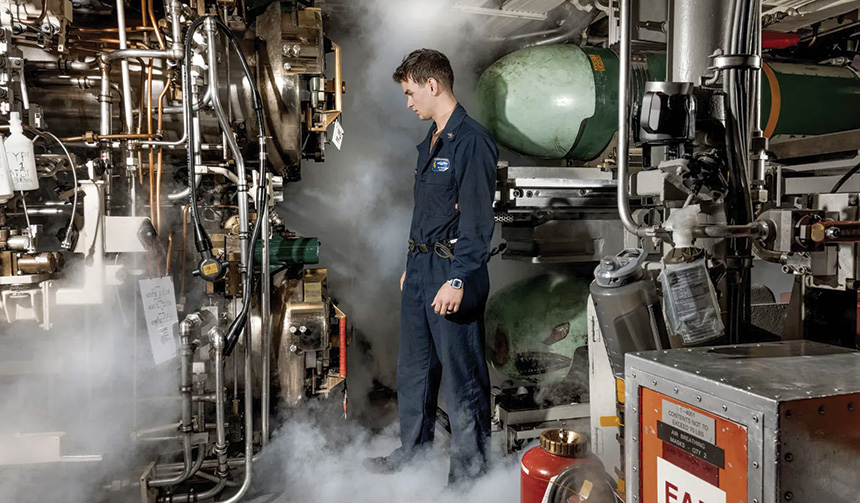
With such a ramp up in power production, the nation will require a well-trained workforce, and that is precisely what MMA’s NET will provide. The U.S. Department of Energy estimates that 375,000 new jobs will be added to the nuclear industry by 2050. Anticipating these trends, in May 2025, the White House issued a number of executive orders on nuclear energy that will essentially add 300 gigawatts of new U.S. nuclear capacity by 2050 and bolster the American nuclear workforce.
When viewing through the prism of energy policy based on the highest reliability and lowest impact to the environment, the world is gradually recognizing that nuclear power has no equal. This fact is rooted in physics.
When compared to fossil fuels, nuclear has 3 million times the energy density of coal, and 1.5 million times that of natural gas.
In contrast, renewables – such as offshore wind farms and solar – are not fuels, and therefore one typically calculates how much power is generated per square meter of space (footprint). On average, an offshore wind farm has an output of between 2-3 watts per square meter. A nuclear power plant’s ratio is 1,000 to 2,000 watts per square meter.
Moreover, it is well known that wind is highly variable, and for that reason its capacity factor is about 50%, while that for nuclear is above 90%. For solar power, the density is 20-100 watts per square meter, but the intermittent nature of sunlight lowers the capacity factor in the range of 20%.
In summary, nuclear energy integrates well with all renewables on the power grid while simultaneously ensuring a highly reliable baseload.
What Distinguishes MMA’s NET?
The timing of the MMA’s foray into the nuclear engineering space is superb for several key reasons. First, we have seized the initiative and will become the nation’s first maritime university to offer a nuclear engineering technology major. Second, the burgeoning and resurgent nuclear industry – now driven by high demand from the AI industry – needs technologists and operators more than designers. This immediately differentiates MMA from the legacy nuclear engineering programs, e.g. Texas A&M University, the University of Tennessee Knoxville, the University of Michigan, MIT, North Carolina State, etc.
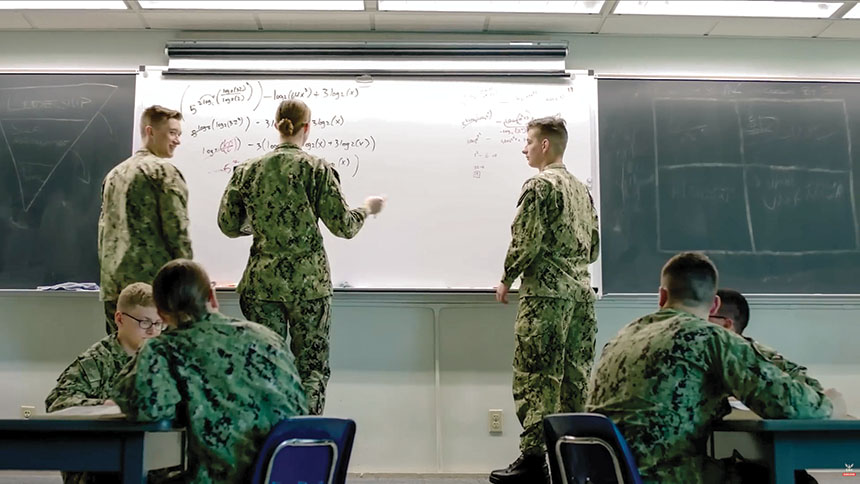
In the Nuclear Engineering Technology (NET) market, there are two Bachelor of Science programs: Excelsior University and Thomas Edison State University. Both are online. There are also several community colleges in the U.S. that offer an associate’s degree in NET. MMA’s NET will distinguish itself from this competition by building upon our renowned steam curriculum, as well as the trademark “hands-on” education that is highly valued by industry.
What are NET’s Expected Outcomes?
The NET major will establish a gold standard for MMA’s engineering technology programs. It will foster differentiation and will become an ETAC of ABET accredited program. Consistent with that objective, we are seeking students who have demonstrated solid preparation in high school that includes mathematics through pre-calculus and three years of laboratory-based science courses, including chemistry and physics.
Demographically, MMA’s NET program will attract students from across the United States as MMA becomes the first U.S. maritime university with a nuclear engineering technology program.
In short time, NET will be poised to be the first to develop a United States Coast Guard (USCG) licensed track for both deck and engine students.
“The burgeoning and resurgent nuclear industry – now driven by high demand from the AI industry – needs technologists and operators more than designers.”
— Paul Wlodkowski, Ph.D.
In its current form, NET will be a non-Regimental program whose objective will be to address the high demand emerging for a qualified nuclear workforce. MMA’s NET program will focus on the practical education and training of technologists with strong operational skills demanded by the nuclear industry.
NET graduates will be able to operate and manage these highly specialized facilities and electrical power generating stations. NET will provide a focused program to prospective students interested in nuclear energy and will not conflict with USCG-licensed programs or general shoreside programs like Power Engineering Technology with their emphasis on renewables and traditional fossil-fuel power plants.
National Recognition and Momentum
The Atlantic Council, the prestigious international think tank, recently named MMA a “leading institution” in the development of a nuclear engineering technology curriculum. The Board’s
approval of the major also coincides with the U.S. Department of Transportation and the Maritime Administration (MARAD)’s May 7, 2026 announcement launching an initiative to develop SMRs for commercial shipping.

“To successfully introduce SMRs, we must view this through a system-transition lens rather than just as a technology demonstration,” said MARAD Administrator Stephen M. Carmel. “We are seeking critical insights on how the government can help reduce systemic uncertainty, align regulatory structures, and enable the market conditions necessary for private capital and operators to scale these groundbreaking technologies.”
The announcement of the intent to develop nuclear reactors for marine propulsion follows the U.S. Coast Guard’s establishment of the Maritime Nuclear Policy Division in December. Beyond propulsion, floating nuclear power plants using SMRs are gaining traction globally as a way to meet growing onshore power demand.
In furtherance of these initiatives, MMA aspires to become the premier maritime university to train United States Coast Guard (USCG) licensed cadets, both deck and engine, for the civil maritime nuclear industry. Our leadership in this sphere was recently acknowledged by the U.S. Department of Energy (DOE). MMA was one of ten colleges and universities to receive funding from DOE to enhance nuclear safety training and workforce development. The $1M grant was awarded to MMA to establish its Center for Education and Training of the Nuclear Merchant Mariner.
Conclusion
Few academic degree programs have the potential of nuclear to “change the world” in a positive way by providing clean, reliable, carbon-free energy.
Recent advances in SMRs – notably passive safety systems that require no human intervention or external power – have expanded nuclear energy’s potential to reduce carbon emissions across power generation, marine propulsion, water desalination, and the production of alternative fuels such as hydrogen and ammonia. Because of these advances, nuclear energy is also garnering significant bipartisan support.
 On March 31, 2026, Maine Governor Janet Mills joined her chief executive colleagues from all the other New England states in issuing the following Joint Statement: “Adequate electricity supply is critical to growing our economies, preserving public health and safety, powering our homes and businesses, and stabilizing consumer prices as demand for electricity rises across the region. New England has a long tradition of collaborating on regional energy matters. As governors, we are committed to safeguarding our collective energy future through advancement of a diverse energy strategy that includes nuclear power, a pillar of New England’s electric system.”█
Begin Your Path to Nuclear Engineering Technology Now
David Markow, Vice President of Enrollment Management, Admissions, and Financial Aid
Students interested in the Nuclear Engineering Technology (NET) program beginning in Fall 2027 can start at MMA in Fall 2026 without losing time or credits.
Students may enroll in the Power Engineering Technology (PET) program for the 2026–2027 academic year and complete the first-year curriculum, which aligns with the first year of the NET program. In Spring 2027, students can submit a change of major to NET, and successfully completed courses will transfer directly into the program for Fall 2027 entry.
Steps to Begin Your NET Pathway
- Apply and enroll in the Power Engineering Technology (PET) program for Fall 2026
- Successfully complete the first-year PET course requirements during the 2026–2027 academic year
- Submit a change of major form to NET during Spring 2027
- Begin your second year in the Nuclear Engineering Technology (NET) program in Fall 2027


Post Comment
Comments are moderated and will be reviewed prior to posting online. Please be aware that when you submit a comment, you agree to the following rules:
Maine Maritime Academy reserves the right to delete any comment that does not comply with these guidelines and is not responsible or liable in any way for comments posted by its users. If you have a message for the editor, please email mariner@mma.edu.
Features
View All >Read More
Read More
Castine, Maine 04420All Rights Reserved © 2026
Privacy Policy & Terms
Web issue? Contact Webmaster