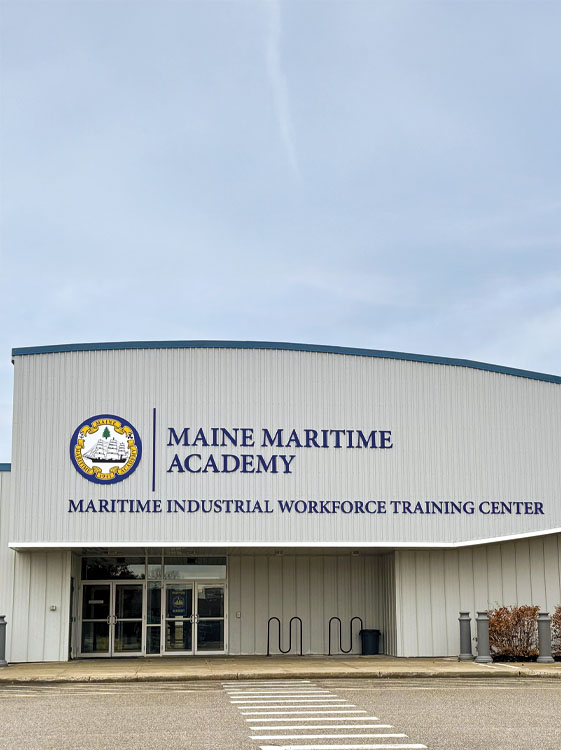
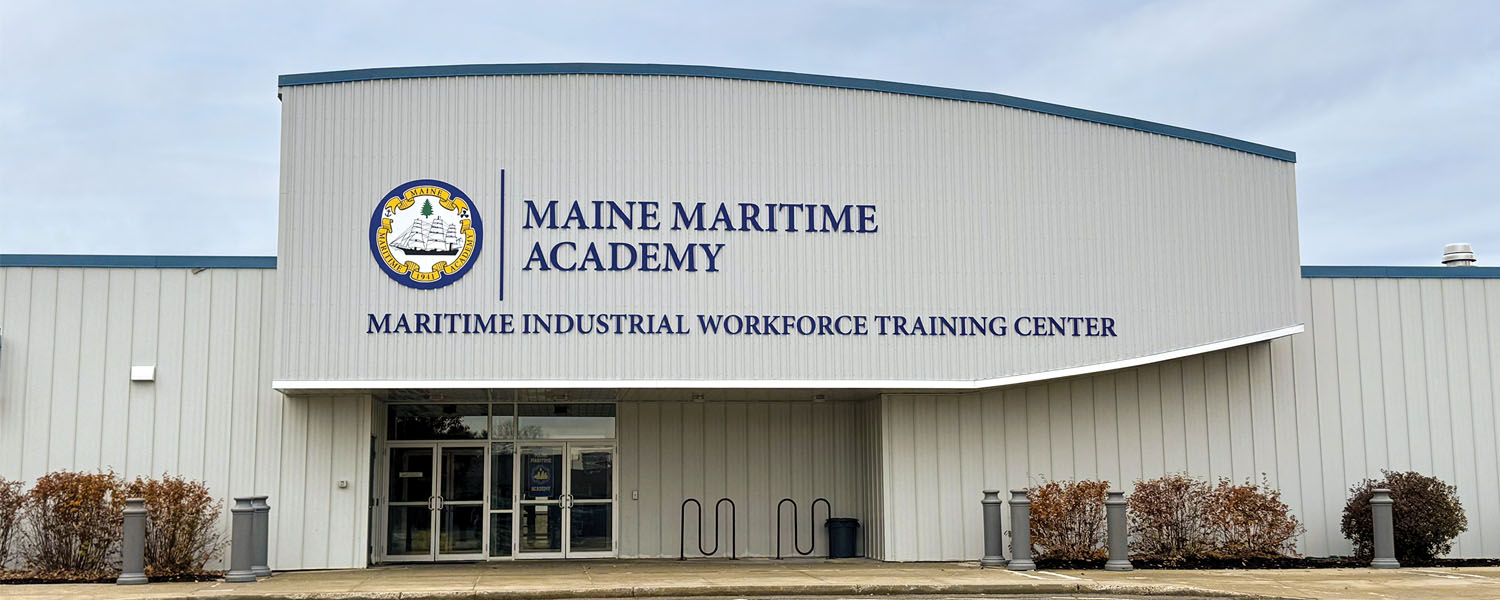
When Maine Maritime Academy opened the doors to the public in late October for the unveiling of its newest facility in Brunswick — the Maritime Industrial Workforce Training Center (MIWTC) — one message rang loud and clear: the future of America’s shipbuilding workforce starts here.
The Academy boldly secured the nearly 50,000-square-foot facility on the redeveloped Brunswick Landing, once home to Naval Air Station Brunswick. During its operational years, that base launched generations of service members into missions that protected our coasts and supported U.S. naval power across the globe. Today, the site’s purpose endures — still in service of national defense — but its front line has changed. Now, it’s powered by the hands, skill, and determination of the men and women who build and sustain the U.S. Navy’s fleet.
Shipbuilding has long been woven into Maine’s DNA. From the wooden schooners of the 1700s to the destroyers launched at Bath Iron Works during World War II, this region has always answered the nation’s call. What was once a bustling hub of naval aviation is now transforming again — this time into a strategic training ground for America’s next generation of defense tradespeople.
The MIWTC’s mission is ambitious: to create a facility that mirrors a working shipyard, training up to ten core trades and offering multiple pipelines — from new entry-level skills training responding to the industry’s demand signal, to incumbent workers seeking to sharpen their craft, to accelerated boot camps and leadership programs addressing emerging needs across the Maritime Industrial Base.
Without waiting for federal grants or a perfect moment, MMA acted. With limited resources but unwavering determination, the Academy forged ahead, putting its neck out for the mission. As Matt Sermon of the Navy’s Program Executive Office for the Maritime Industrial Base has said,
“You can’t wait for the conditions to be ideal — you fight for the mission with what you have.”
Phase 1 is already in full swing. In partnership with General Dynamics Bath Iron Works (BIW), MMA co-leads an apprentice program that’s been producing world-class shipbuilders for nearly four decades. It’s one of the nation’s only programs that combines paid, full-time shipyard employment with college-level instruction. Apprentices log thousands of on-the-job hours in welding, shipfitting, pipefitting, and marine production design while completing 60 academic credits through MMA. Graduates earn an Associate of Science in Shipbuilding Production or Ship Design, a State of Maine apprenticeship certificate, and a BIW diploma — credentials that launch lifelong careers and strengthen the Navy’s supply chain.
When asked about the benefits of running a joint program, BIW’s Director of Training Tom Stevens said, “It’s partnerships like this that will enable BIW to have a solid pipeline of skilled workers to feed the growing need of shipbuilders and help to meet the need of 500+ new shipbuilders a year.”
The MIWTC also reaches younger generations through collaboration with Maine Career and Technical Education (CTE) centers and regions that offer hands-on, career-focused education to high school students, opening doors for high-school juniors and seniors who were previously wait-listed due to limited space. Students from Brunswick’s Region 10 CTE are learning skills at MIWTC that can provide access to hands-on, high-wage career paths, building a foundation for a workforce that could add up to 1,000 new skilled tradespeople each year once the center reaches full capacity.
This initiative couldn’t come at a more critical time. The U.S. Navy’s battle-force fleet stands at roughly 296 active ships as of 2025, but its long-range shipbuilding plan calls for more than 300 ships by 2032 and 381 manned vessels by the early 2040s to sustain global readiness. Yet America’s shipyards face a shortage of tens of thousands of skilled workers and attrition rates exceeding 20 percent in key trades — a bottleneck threatening the Navy’s ability to deliver ships on time and maintain those already at sea.
Craig Johnson, President of MMA, emphasized the importance of moving beyond isolated efforts to achieve the Navy’s mission. Johnson stated that MMA, BIW, and Region 10 have already initiated effective collaboration, and future partnerships will further strengthen workforce development at the shipyards. These joint initiatives are designed to create sustainable talent pipelines, ensuring a steady supply of skilled tradespeople for years to come. Johnson concluded by affirming that success requires both decisive action and shared belief—principles central to MMA’s approach.█


Post Comment
Comments are moderated and will be reviewed prior to posting online. Please be aware that when you submit a comment, you agree to the following rules:
Maine Maritime Academy reserves the right to delete any comment that does not comply with these guidelines and is not responsible or liable in any way for comments posted by its users. If you have a message for the editor, please email mariner@mma.edu.
Features
View All >Read More
Read More
Castine, Maine 04420All Rights Reserved © 2026
Privacy Policy & Terms
Web issue? Contact Webmaster